· by Hanna Carolina · 5 min read
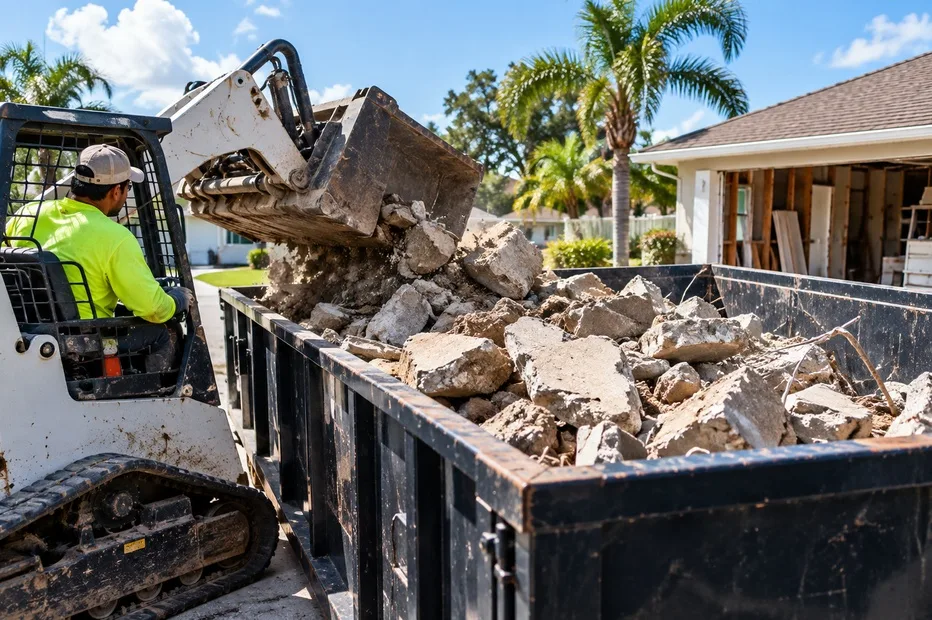
Concrete, brick, block, and other heavy demolition debris need a smaller, dedicated roll off. Dense material reaches the container's weight limit long before it fills the box, so a big dumpster only gives you more room to go overweight. The right size keeps your project safe, legal on the road, and priced the way you expected.
If you are tearing out a driveway, patio, or block wall, a few minutes on the phone before you book can save you a surprise bill later. At Wasteville Dumpster & Demolition Services, we haul heavy loads around Kissimmee every day. To talk through your project, reach out to our team at (407) 565-2366.
Why does concrete need a dedicated smaller roll off?
Concrete needs a smaller roll off because it is extremely heavy for its size. A container that would hold a whole garage of household junk can become dangerously overweight with only a few feet of broken slab inside.
Every truck and container is rated for a maximum weight, and that limit does not change with the size of the box. A large dumpster is built for bulky, lighter material like furniture, drywall, and cabinets. Fill even part of it with concrete and you can pass the weight limit while the container still looks mostly empty. A smaller roll off keeps the load within what the truck can safely lift and haul.
Keeping heavy debris separate also matters. Clean concrete, brick, and block are often handled differently from mixed trash, so mixing in yard waste or household junk can complicate disposal. We see this often on older homes in neighborhoods off US 192, where a driveway replacement or a crumbling block wall comes out in one weekend. Tell us what you are removing, and we will match you with the right dumpster rental for the material.
How do weight limits affect roll off pricing?
Roll off pricing is usually based on the container size, the rental period, and an included weight allowance. Go over that allowance and overweight charges are added, which is why estimating your debris weight before you book matters so much.
Disposal sites charge by weight, and that cost gets passed along. With household junk, most people never come close to the limit. With concrete, it is easy to blow past it. A broken slab is far heavier than it looks, and a thick driveway with rebar or a footer adds up fast.
The simplest way to protect your budget is to give us the details up front: what you are removing, roughly how many square feet, and how thick the concrete is. Measure the area with a tape before you call, and note whether the slab has rebar or wire mesh. With those numbers, we can recommend the right size and explain how the weight allowance works for your job, so the price on your invoice matches the price you planned for. For bigger tear outs, such as a full driveway and patio on a lot near Lake Tohopekaliga, we may recommend more than one haul instead of one oversized container.
How do you load concrete and dense debris safely?
Load concrete low and even, spread the weight across the floor of the container, and never fill heavy debris above the fill line or the top rim. A level, balanced load is safer to lift and safer on the road.
Break slabs into pieces you can handle without straining, and place them rather than throw them. Dropping large chunks from height can damage the container floor and shift the load to one side. Start at the front, near the truck end, and work back, keeping the heaviest pieces down low.
Placement matters too. Choose a firm, level spot for the roll off, and keep it off soft grass after one of our summer afternoon storms. Think about access for wheelbarrows, and leave clearance from power lines and overhangs. On the narrower older streets near Broadway in downtown Kissimmee, we also check that the truck can set the container without blocking the road.
We learned how much the right setup matters on a driveway job here in Kissimmee. A contractor demolishing a homeowner's driveway assumed the largest dumpster would be best, saving multiple trips. But when the first load of concrete hit the bottom of the container, it rattled the whole truck. We brought in a properly sized roll off designed for dense debris and saved the crew from getting hit with an overweight bill at the landfill.
How does demolition and haul away service work with your roll off?
If you would rather not break up and load the debris yourself, our crew can handle the demolition and haul it away, using the right container for the material. You get one team responsible for the whole job, from tear out to cleanup.
For many homeowners, the heavy lifting is the hardest part. Breaking out a patio or a block wall takes the right tools, and loading hundreds of pounds of concrete by hand is slow, exhausting work in the Florida heat. When we take on the demolition, we plan the container size, the number of hauls, and the loading ourselves, so the weight stays where it should.
Most projects also turn up more than concrete. Old fencing, a broken shed, or leftover materials in the garage can be cleared at the same time with our junk removal service, keeping those lighter items out of your heavy debris container. Whether you are clearing a yard in Buenaventura Lakes or replacing a walkway closer to downtown, one call covers every piece of the job.
Ready to book the right roll off for your concrete or heavy debris? Call Wasteville Dumpster & Demolition Services at (407) 565-2366, or request your roll off quote, and we will help you size it right the first time.