Loading a dumpster incorrectly can cause serious accidents and cost you hundreds in overweight fees. Kissimmee homeowners often throw heavy items in first without thinking about weight distribution. If you need a safe and reliable dumpster rental, contact Wasteville Dumpster & Demolition Services at (407) 565-2366.
Why Does Dumpster Weight Distribution Matter?
Uneven weight distribution makes containers extremely dangerous to lift and transport. If you put all heavy items on one side, the delivery truck can tip over during pickup. Balanced loads keep drivers safe on busy Central Florida roads like US-192 and prevent extra handling fees that typically run $75 to $150.
In our years serving Osceola County, our technicians typically find that DIY loaders ignore the back corners. They drop everything right at the door. This creates a massive weight imbalance. When the truck attempts to winch the bin onto the flatbed, a front-heavy load puts immense strain on the hydraulic cables. A cable snap can cause catastrophic property damage or severe injury.
Think of it like loading a moving van. You would never put all your heavy oak furniture on the left side and feather pillows on the right. You need a stable center of gravity. Balancing your waste protects your driveway from cracking under uneven pressure. It also ensures a smooth, safe pickup process for everyone involved.
How Do You Load Heavy Items Properly?
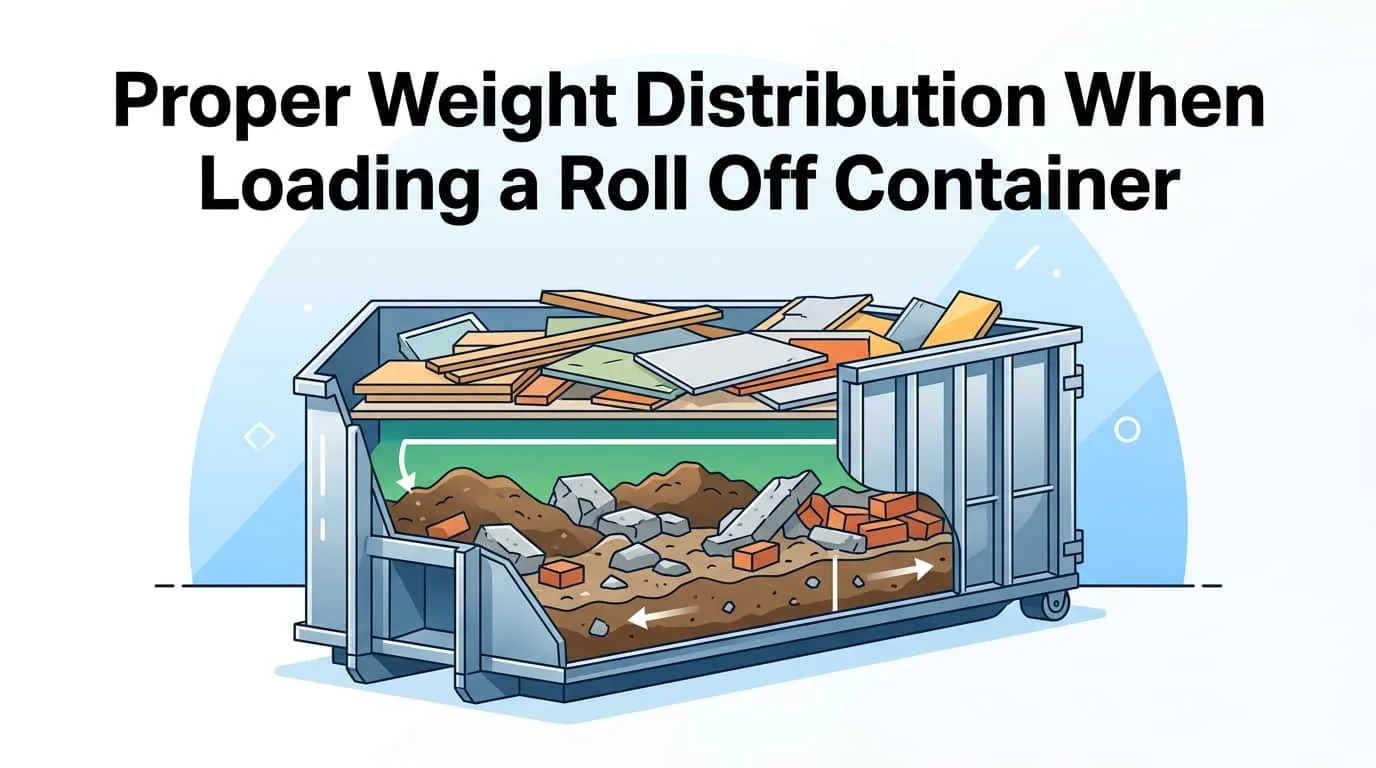
Place your heaviest items flat on the bottom and spread them evenly across the entire floor. Distribute the weight of old appliances, dirt, or roofing shingles from the front door all the way to the back wall. This creates a stable foundation and keeps the center of gravity low.
When you rent a roll off Kissimmee, Florida residents rely on, you must respect the physics of heavy lifting. Start by walking your largest items through the swing door. Lay items like doors, drywall sheets, and heavy wooden headboards completely flat. If you lean heavy items against the side walls, they will shift during transit. This shifting throws off the balance of the truck while turning corners near Kissimmee Lakefront Park or merging onto the Turnpike.
Once your heavy base layer is set, you can begin adding medium-weight items. Spread these out equally. If you place a heavy sofa on the left side, put a similarly heavy dresser on the right side. We see many homeowners try to build towers of trash. Avoid this completely. Keep the load low and wide to guarantee maximum stability.
What Are the Rules for Fill Lines?
Keep all debris level and strictly below the top edge of your container. Drivers legally cannot transport an overflowing bin on Florida highways because flying debris causes severe car accidents. If your waste goes above the fill line, you will face a minimum $100 trip fee for a failed pickup.
You must follow local transport laws for any roll off Kissimmee, Florida project. The fill line exists for safety, not just to limit your space. When we tarp the load for transport, the cover must sit flat. Sharp pieces of wood or metal sticking over the top will shred the heavy-duty transit tarps. A shredded tarp costs money to replace and leaves debris exposed to the wind.
If you have large, bulky items that refuse to lay flat, break them down. Smash old cabinets with a sledgehammer or cut long branches into smaller sections. If you completely run out of space, do not keep piling items higher. You will need to schedule a swap-out or hire a junk removal service to handle the excess material.
How Much Weight Can a Roll Off Dumpster Hold?
A standard 20-yard container holds up to 3 tons or 6,000 pounds of debris. If you are doing a heavy roofing job, keep in mind that 50 squares of shingles will easily hit that limit. Going over your allowed tonnage usually results in overage fees of around $65 per ton.
Every container size comes with specific weight limits. Our 12-yard bins include 1 ton of disposal weight. Our 16-yard bins cover 2 tons. The 30-yard option can handle up to 4 tons. Understanding these limits helps you budget accurately. Dense materials like concrete, brick, and wet dirt add weight incredibly fast. Just two cubic yards of concrete can weigh 4,000 pounds.
If your project involves heavy demolition debris, please let us know beforehand. We might recommend a smaller bin specifically rated for heavy materials. Filling a large 30-yard container to the top with concrete will make it completely unmovable. The truck literally will not have the hydraulic power to lift it. Planning your weight limits ahead of time saves you from costly offloading labor later.
How Should You Layer Different Materials?
Start with flat, heavy items on the bottom to build a solid base. Add bulky items like furniture next, and fill the remaining gaps with smaller loose trash. This method maximizes your rented space by up to 30 percent and prevents shifting during transport.
Treat loading your roll off Kissimmee, Florida container like a game of Tetris. Empty space is wasted money. After you lay down your flat items, load the bulky pieces. Then, take bags of regular household trash or small yard debris and stuff them into the empty pockets around the furniture.
Breaking down boxes makes a huge difference. A fully assembled cardboard box takes up massive amounts of cubic footage but adds zero weight. Flatten every box. Disassemble old desks and tables. The more you break things down, the tighter you can pack the material. A tightly packed container does not shift when the truck hits the brakes in heavy Orlando traffic.
Need Help With Your Next Cleanout?
Proper loading keeps your neighborhood safe and saves you money. A well-balanced bin guarantees a fast pickup with zero surprise fees. For your next home project, trust the experts at Wasteville Dumpster & Demolition Services. Contact Wasteville Dumpster & Demolition Services at (407) 565-2366 to book your bin today.